

Trump’s administration unveils an ambitious plan to position the U.S. as the leader in AI technology by easing regulations.
The Trump administration revealed its comprehensive plan for artificial intelligence on Wednesday, aiming to establish the United States as the foremost authority in a field anticipated to rival the impact of the internet. By diminishing AI regulations, the administration seeks to achieve this ambitious goal, with a particular focus on eliminating political biases within AI systems.
The strategy comprises three main components: boosting innovation, expanding AI infrastructure domestically, and establishing American hardware and software as the global standard for AI advancements. Additionally, the plan suggests that large language models acquired by the federal government should remain neutral and unbiased, as outlined in a detailed 28-page document released by the White House.
As part of its ongoing efforts to enhance AI infrastructure and investment, the Trump administration signals its dedication to outpacing China in the AI race. White House AI Chief David Sacks emphasized the global contest for AI supremacy and the transformative effects AI will have on the economy and national security, underscoring the necessity for America to maintain its leadership role.
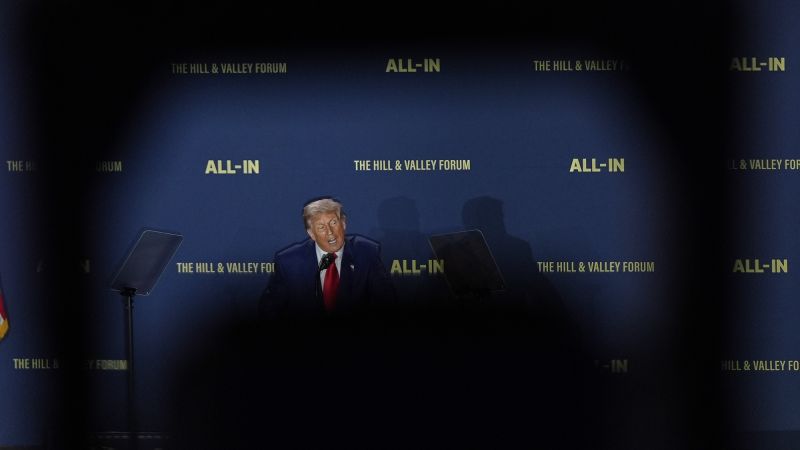
During a Washington event titled “Winning the AI Race,” Trump elaborated on his vision of minimizing limitations and regulations affecting AI development. He likened the industry to “a beautiful baby” that must grow unfettered by political or nonsensical rules, expressing a distaste for the term “artificial intelligence” due to its artificial connotation.
The plan involves cutting bureaucratic obstacles to AI development, drawing from recommendations by the private sector, academia, and civil society groups. It also aims to streamline permits for data centers, semiconductor manufacturing, and energy infrastructure. The government plans to collaborate with U.S. tech companies to provide “full stack AI export packages” to allied nations, promoting American technology as the international benchmark.
Michael Krastios, head of the White House Office of Science and Technology, stated that the policies within the action plan are executable within the next six to twelve months. Despite differing opinions among lawmakers and tech leaders on AI regulation, the administration stresses the importance of a unified federal standard over disparate state regulations.
Some critics argue that the administration is prioritizing tech industry interests at the expense of AI safety, with concerns about AI’s impact on employment and youth. In response, a coalition of privacy advocates, labor unions, and other organizations proposed a “People’s Action Plan” to counteract the administration’s proposals.
The plan calls for updating federal procurement guidelines to ensure government contracts are awarded to developers of large language models that are free from bias, though experts warn of the challenges in defining and enforcing such standards. This could potentially slow innovation as companies adjust to new requirements.
Trump’s announcement follows a series of AI-related investments and initiatives during his second term, including a significant investment in Pennsylvania and a collaborative AI infrastructure project named Stargate. Additionally, he has rolled back export restrictions on AI chips, allowing Nvidia to resume sales to China.
While collaboration between the tech industry and the government is not new, Trump’s administration has seen significant involvement from tech CEOs, driven by the shared objective of maintaining a lead over China’s AI aspirations. This has been underscored by concerns regarding China’s rapid advancements in AI technology.
Microsoft vice chair and president Brad Smith highlighted the importance of global adoption in determining which nation—U.S. or China—will dominate the AI landscape, emphasizing the strategic importance of this technological race.
