

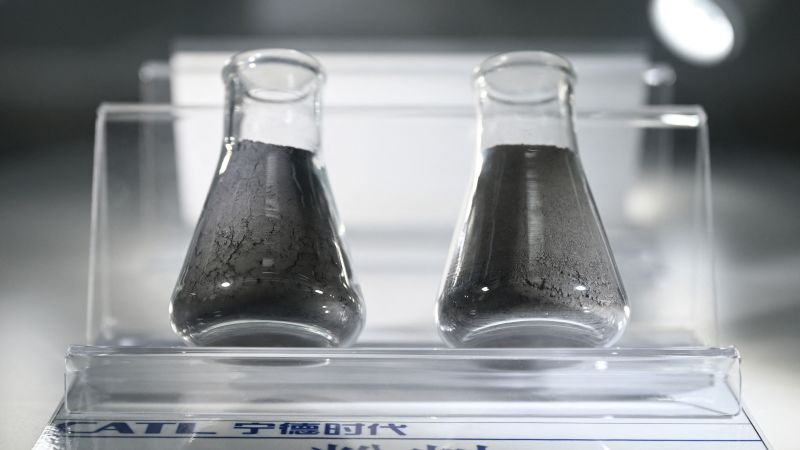
Trump’s administration imposes a hefty tariff on Chinese graphite, affecting the cost of electric vehicle production in the U.S.
In a strategic move, the Trump administration is setting a significant tariff on Chinese graphite, a key component in the manufacture of electric vehicle batteries. This action threatens to elevate the expense of producing EVs within the United States.
The Commerce Department revealed a 93.5% tariff on Chinese graphite, accusing China of undercutting the U.S. market by selling the material below its market value. Domestic graphite producers have welcomed the decision, claiming that Chinese manufacturers dominate the market, hindering American companies from thriving.
While graphite is relatively affordable at less than $2 per pound, imports from China to the U.S. have surged, doubling over two years and reaching $347 million in 2023. Yet, American producers have struggled to produce graphite of the purity needed for EV batteries, as noted by Tesla during the investigation concerning the tariffs.
Mike O’Kronley, CEO of American graphite producer Novonix, expressed optimism about the tariff’s potential to boost investment and production within the domestic industry. “This is going to be very transformative for the graphite industry in the United States,” he commented, emphasizing the overcapacity in China that disrupts U.S. mineral development.
This step not only intensifies trade tensions between the U.S. and China but also poses challenges for American EV production. The Trump administration is reducing federal support for electric vehicles, including the withdrawal of government loans for EV factory and battery plant construction, and the elimination of a $7,500 tax credit for EV buyers.
Last year, the Biden administration imposed a 25% tariff on graphite, setting the stage for the recent 93.5% tariff increase. With other duties, Chinese graphite could face tariffs up to approximately 160%. However, the U.S. currently lacks sufficient graphite production to meet demand, compelling American EV battery manufacturers to bear higher costs for Chinese graphite.
Despite requests for comment, numerous auto and EV battery manufacturers remained silent. During hearings about the tariff hike, legal representatives for automakers argued that American producers cannot meet the high-quality graphite demands for EV batteries.
“Lithium-ion battery producers require graphite with a 99.9 percent carbon purity level, meaning extremely low metallic impurities,” stated Matt Nicely, representing Tesla at a hearing. “No U.S. producer can achieve these stringent specifications. Domestic producers cannot blame imports when they haven’t met market needs.”
Even O’Kronley acknowledges that the domestic market needs time to catch up. “Developing and qualifying this material for battery use takes time,” he said. “Immediate changes in supply won’t occur due to tariffs, but gradual development and enhancement of the U.S. industry will accelerate.”
