

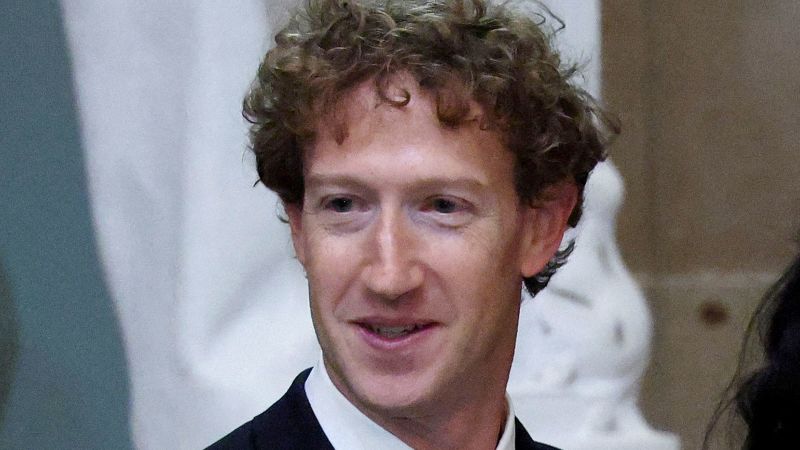
Meta CEO Mark Zuckerberg is redirecting his company’s focus towards the elusive goal of artificial superintelligence, investing heavily in top-tier talent and infrastructure despite uncertain immediate business benefits.
Mark Zuckerberg, the CEO of Meta, is resolutely pursuing the development of artificial superintelligence, a form of AI anticipated to surpass human capabilities in all areas of knowledge work. While this ambitious target might seem abstract and distant, and its immediate utility to Meta’s core operations is debatable, Zuckerberg is nonetheless committing vast financial resources to assemble a distinguished team of researchers and engineers to outpace competitors like OpenAI.
The recruitment efforts have sparked a fierce competition within the AI sector, marked by lucrative compensation packages aimed at attracting leading experts away from rival companies. Recently, OpenAI’s CEO Sam Altman claimed that Meta was offering substantial signing bonuses to entice his employees to switch allegiance. Furthermore, Google’s CEO Sundar Pichai faced inquiries regarding his company’s position in this talent acquisition battle during an earnings call, highlighting Wall Street’s vested interest in the AI race.
The stakes for Zuckerberg are notably high, especially after Meta’s unsuccessful transition towards the metaverse. Now, he aims to reposition Meta as a frontrunner in AI, investing billions in necessary infrastructure like data centers and chips. Unlike its tech counterparts, Meta lacks a cloud computing division to quickly monetize these investments, and faces challenges, such as delays in launching the most advanced version of its Llama 4 AI model.
According to analyst Gil Luria from D.A. Davidson, the lesson from the Llama 4 model is clear: possessing extensive hardware resources is insufficient without the right team to develop the model. Zuckerberg’s belief in the transformative potential of AI aligns him with a group of Silicon Valley “AI maximalists.” Achieving leadership in AI is critical for Meta and similar companies whose executives subscribe to this ideology.
Zuckerberg’s recent Threads post emphasized his dedication to assembling the industry’s most elite team for the superintelligence quest. Last month, Meta invested $14.3 billion in Scale AI, a startup specializing in data labeling. This acquisition included Scale’s founder and former CEO, Alexandr Wang, who now spearheads Meta’s Superintelligence Labs alongside former GitHub CEO Nat Friedman.
Friedman expressed optimism through a recent X post, stating his confidence in the promising future of AI developments at Meta. Zuckerberg also announced the appointment of Shengjia Zhao, a co-creator of ChatGPT, as the chief scientist of Meta Superintelligence Labs. Zhao is tasked with establishing the research agenda and scientific direction for the team, while Meta’s long-standing chief scientist, Yann LeCun, continues to lead the Fundamental AI Research team.
In recent weeks, Meta has successfully attracted distinguished researchers and engineers from industry giants like Apple, Google, and Anthropic. Reports from Bloomberg, Wired, and The Verge indicate that Meta has, in some instances, offered substantial financial packages to these new AI hires, demonstrating the lengths Zuckerberg is willing to go in the pursuit of AI superintelligence, despite contesting some reported figures.
Meta’s strategic shift towards superintelligence is seen as an effort to establish a foundational platform for the next technological wave. Historically, Meta missed out on dominating mobile web operating systems, a race won by Apple and Google. Zuckerberg has been vocal about his dissatisfaction with app store fees and compliance requirements.
Meta’s collaboration with Amazon Web Services on a program supporting startups using the Llama AI model signifies its intent to embed its technology in emerging AI-driven businesses. Despite AI’s contributions to Meta’s advertising sector, some analysts remain skeptical about the tangible benefits of the superintelligence pursuit for the company.
Minda Smiley, a senior analyst from Emarketer, anticipates that Meta executives will face probing questions about the alignment of their superintelligence goals with the company’s broader business strategy during the upcoming earnings call. The financial burden of competing directly with OpenAI is considerable, yet Meta’s rapidly growing core business provides the means to fund its ambitious recruitment drive, noted CFRA Research analyst Angelo Zino. Investor confidence is apparent, as reflected in a 20% increase in Meta’s share price since the year’s start.
Should Zuckerberg’s vision come to fruition, Meta could transcend its identity as a social media enterprise. Zack Kass, an AI consultant and former OpenAI leader, suggests Zuckerberg is at a pivotal moment in his career, with aspirations that extend beyond Facebook’s legacy of global connectivity. Achieving superintelligence capable of solving complex challenges like cancer would redefine his enduring impact.
