

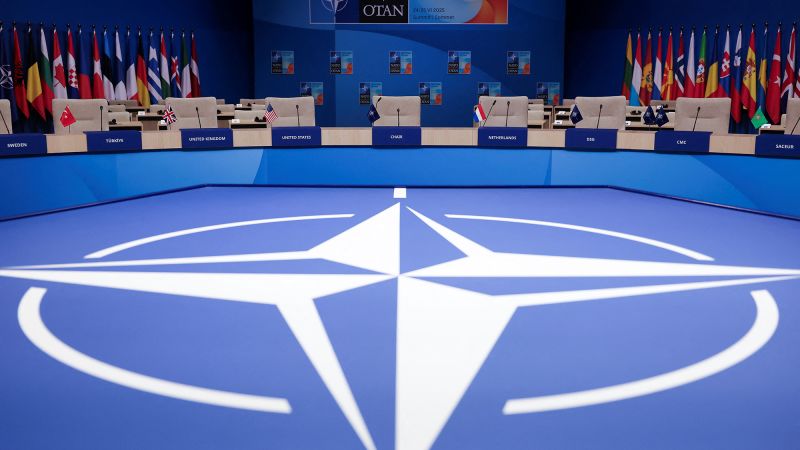
NATO’s financial ambitions pose a challenge for its European members grappling with debt.
The North Atlantic Treaty Organization, a coalition of 32 nations, is embarking on a significant increase in military and security spending over the next decade. However, this financial commitment is proving to be a challenge for some European members already burdened with substantial debts.
According to Marcel Fratzscher, head of Germany’s Institute for Economic Research, such a substantial spending surge in defense is unprecedented during peacetime. NATO’s recent decision to amplify defense spending to 5% of GDP by 2035 is a dramatic leap from the current 2% target, echoing long-standing demands by former US President Trump.
Europe is facing a dual challenge: a resurgent Russia and a more reticent America regarding regional security. European governments have three primary strategies to meet these targets: reducing other expenses, raising taxes, or increasing borrowing. Yet, analysts suggest that each approach presents significant political and economic hurdles.
Bruegel, a Brussels-based think tank, highlights the fiscal constraints many European Union countries face, making it unlikely for them to meet these ambitious targets. Many have struggled even to reach the previous 2% goal, despite increased spending after Russia’s 2022 aggression in Ukraine, with the EU’s executive branch expecting NATO’s European members to achieve this target based on their collective GDP.
The new 5% target involves a commitment of 3.5% of GDP on core defense needs, including weaponry, while the remaining 1.5% is earmarked for supportive infrastructure. This necessitates finding billions more each year.
Frank Gill from S&P Global Ratings warns that meeting just the 3.5% requirement may compel European nations to borrow extensively. While some countries might reallocate funds from other areas, this remains a difficult task amid existing fiscal pressures, including an aging population driving up pension costs.
Fratzscher asserts that cutting expenses is virtually impossible for most NATO countries. He believes the only viable financing route is tax hikes, but political and public resistance remains a significant barrier.
Additional borrowing is equally challenging, given that many European governments already carry debts comparable to their GDP. S&P Global Ratings projects that achieving the core defense target alone could inflate NATO’s European members’ collective debt by $2 trillion by 2035, against a combined GDP of $23.1 trillion for the EU and the UK.
Countries like Italy, France, and Belgium, with already high debt-to-GDP ratios, face considerable difficulties. French Prime Minister François Bayrou has warned that without changes, France’s debt interest payments could become its largest expense, reaching €100 billion by 2029, although he advocates for defense investment while curbing other expenditures.
The EU is attempting to ease this financial burden by exempting defense spending from its fiscal rules and establishing a €150 billion fund to facilitate favorable loans for defense investments.
Guntram Wolff of Bruegel suggests an alternative for EU NATO members: simply not increasing spending. Spain, for instance, has already decided against meeting the 5% target, prioritizing welfare spending instead, as it allocated only 1.28% of GDP to defense last year.
Wolff notes that a country’s proximity to Moscow is a more reliable indicator of defense spending increases than NATO summit pledges.
