

Examining the Intersection of Economic Forces and Immigration Policies at Home Depot
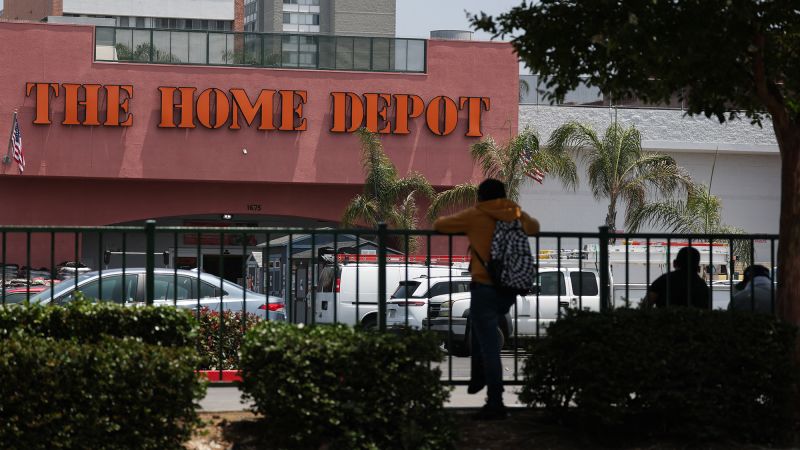
During the summer months, Home Depot parking lots typically bustle with immigrant day laborers eager to secure jobs in roofing, painting, and construction. However, recent immigration enforcement activities have drastically reduced this once-common sight. Across major cities such as Los Angeles, New York City, and Baltimore, numerous day laborers have been detained, igniting national protests and highlighting the Trump administration’s intensified deportation efforts, notably influenced by White House advisor Stephen Miller.
One undocumented worker shared his fears with CNN, explaining that he has ceased seeking employment at a Home Depot in East Windsor, New Jersey due to apprehension over potential ICE encounters. He expressed frustration, stating, “This is the most important season for us to work, and the fear is stopping us from going out.”
Home Depot’s longstanding and intricate relationship with day laborers, or jornaleros, is no coincidence. Since the 1980s, as the company expanded, an informal economy of predominantly Mexican and South American laborers emerged around its extensive parking lots in immigrant-heavy areas. This relationship, once mutually beneficial, has now fractured under the current socio-political climate.
Home Depot’s spokesperson clarified that the company does not receive prior notice of ICE operations and must comply with local and federal law, instructing employees to report incidents without engaging directly with immigration officials.
The broader socio-economic landscape has positioned Home Depot as a primary hiring site for day laborers, making it vulnerable to ICE raids. Factors such as illegal immigration growth, shifts in the construction industry, Home Depot’s market dominance, and housing market fluctuations contribute to this dynamic. Urban policy professor Nik Theodore emphasized that day laborers have become an “on-demand workforce” at Home Depot due to these significant trends, acknowledging the company’s role in shaping these conditions.
Anti-immigration groups have historically targeted Home Depot as a symbol of a flawed immigration system, with protests and crackdowns occurring outside its stores. The image of day laborers waiting in Home Depot parking lots has become emblematic of broader immigration challenges.
Despite the lack of national data, a study from 2006 estimated around 117,000 day laborers gathering at various locations, including Home Depot, daily. This figure is likely higher today. Advocacy groups like the National Day Laborer Organizing Network argue that day laborers are integral to Home Depot’s business model, although the company disputes this notion.
The rise in day laborers has coincided with Home Depot’s expansion, particularly in construction, with stores strategically placed near construction hubs. However, this success has also driven smaller stores out, forcing contractors to cut costs, often turning to low-wage, flexible labor pools outside Home Depot.
The construction industry faces a significant worker shortage, with immigrants comprising roughly 30% of its workforce, and undocumented workers making up over 20%. This demand for cheap labor has helped sustain the industry, especially during housing booms.
Home Depot’s connection with day laborers raises complex issues about worker protections and public safety, as these laborers often operate in ambiguous spaces between private and public domains. Policies addressing these concerns are fragmented, with some cities banning work solicitation on public streets, while others view day laborers as integral to big-box store operations.
Despite Home Depot’s official no-solicitation policy, enforcement varies by location. Worker centers, formed to combat wage theft and exploitation, sometimes experience strained relationships with the company. Notably, in New Rochelle, New York, increased security measures led to laborer arrests and subsequent protests, reflecting tensions between advocacy groups and Home Depot.
The avoidance of Home Depot by day laborers affects both the workers and the retailer’s business. Advocacy groups are urging Home Depot to create designated areas for laborers and resist ICE access to private property without warrants. Some supporters threaten boycotts, potentially impacting Home Depot’s business as DIY spending slows.
Day laborers face challenges with inconsistent pay and exploitation from contractors, yet they find better compensation at Home Depot compared to other jobs. Nonetheless, the persistent threat of ICE actions remains, even in alternative employment settings like restaurants.
